%20%20--%3E%0A%3Csvg%20version%3D%221.1%22%20id%3D%22Layer_1%22%20xmlns%3D%22http%3A%2F%2Fwww.w3.org%2F2000%2Fsvg%22%20xmlns%3Axlink%3D%22http%3A%2F%2Fwww.w3.org%2F1999%2Fxlink%22%20x%3D%220px%22%20y%3D%220px%22%0A%09%20width%3D%2239px%22%20height%3D%2240px%22%20viewBox%3D%220%200%2039%2040%22%20enable-background%3D%22new%200%200%2039%2040%22%20xml%3Aspace%3D%22preserve%22%3E%0A%3Cpath%20fill%3D%22%23FFFFFF%22%20d%3D%22M38.5%2C7H28.2v26h10.3V7z%22%2F%3E%0A%3Cpath%20fill-rule%3D%22evenodd%22%20clip-rule%3D%22evenodd%22%20fill%3D%22%23FFFFFF%22%20d%3D%22M26.1%2C25.5c0%2C5.8-4.1%2C7.5-12.9%2C7.5C3.9%2C33%2C0%2C31.2%2C0%2C25.2v-1.1h11.6%0A%09v2.4c0%2C0.7%2C0.1%2C1.4%2C1.2%2C1.4c1%2C0%2C1.2-0.4%2C1.2-1.3v-0.9c0-1.6-0.9-1.6-3.5-2.2C2.2%2C21.7%2C0%2C19.7%2C0%2C15.3v-0.9C0%2C9.3%2C5.5%2C7%2C12.9%2C7%0A%09c10.2%2C0%2C12.8%2C2.6%2C12.8%2C7.4v1.8h-11v-2.9c0-0.6-0.4-1.1-1.2-1.1c-0.6%2C0-1.2%2C0.4-1.2%2C1.1v0.9c0%2C1.5%2C0.9%2C2%2C3.3%2C2.5%0A%09c8%2C1.6%2C10.5%2C3.3%2C10.5%2C7.5V25.5z%22%2F%3E%0A%3C%2Fsvg%3E%0A)
Expect Officiating to Be a Recurring Storyline During This WNBA Season

In this story:
Last week, Minnesota Lynx coach Cheryl Reeve praised the work of the WNBA officiating task force that she participated in this winter. There had been growing frustration with the physicality of the game over the last few years—with a few especially notable flashpoints. But the situation was poised to improve with new points of education and refereeing emphasis for 2026.
“How our game has looked the last two years is not how we want it going forward,” Reeve told national media last Tuesday. “We’re working really hard because we don’t want the level of physicality that we’ve seen in our game, and so I’m confident that the game is gonna therefore be more fluid—freedom of movement. We play beautiful basketball in the WNBA. We gotta make sure that it’s not marred with unnecessary physical contact.”
After her team played its first game, however, she had more to say. The Lynx fell to the Dream, 91–90, on a night where they were called for 24 fouls. Reeve made it clear that she had not agreed with all of them.
“We talked about some unnecessary physicality,” said Reeve, the longest tenured coach in the WNBA. “We didn’t say we want to call marginal fouls. We never brought that up. It takes a little bit of time, for sure to calibrate, both them and us…Obviously, we’ll continue to work with the league on getting this right. Because we’re not the only team sitting here wondering why everything’s a foul.”
She was not the only person who brought up refereeing in a press conference over opening weekend. As the league kicked off its 30th season, under its biggest spotlight yet, it was clear that players were adjusting to how officials have begun calling games this year.
“We can see they’re calling a little different,” Wings guard Arike Ogunbowale said after picking up five fouls in a win over the Fever. “I guess we just have to adapt, because that’s going to happen… It’s been a long time since I had three fouls in the first half and almost fouling out. I guess show our hands and see what we can do. But yeah, it’s going to be a long season.”
The average number of personal fouls per team per game last season was 17. That number sits at 22 so far this season. Or viewed through another lens: Six of the 11 games this past weekend saw each team whistled for at least 20 fouls. It took a full week of play to see that happen in six games last season. This appears to be a clear period of adjustment for the WNBA.
A focal point for the referees this year is freedom of movement. The WNBA opened its “Points of Education” videos with one devoted entirely to freedom of movement—on the ball, off the ball, on the perimeter, in the post and with screens. “Remember, on-ball defenders cannot affect the opponent’s speed, quickness, balance or rhythm,” the video’s narration reads at one point. Players and coaches had previously criticized a system that allowed defenders to get away with affecting all of the above. But after spending previous seasons waiting for whistles that never blew, some players said the standard appeared to have swung too far in the opposite direction, with too many whistles to get into a groove.
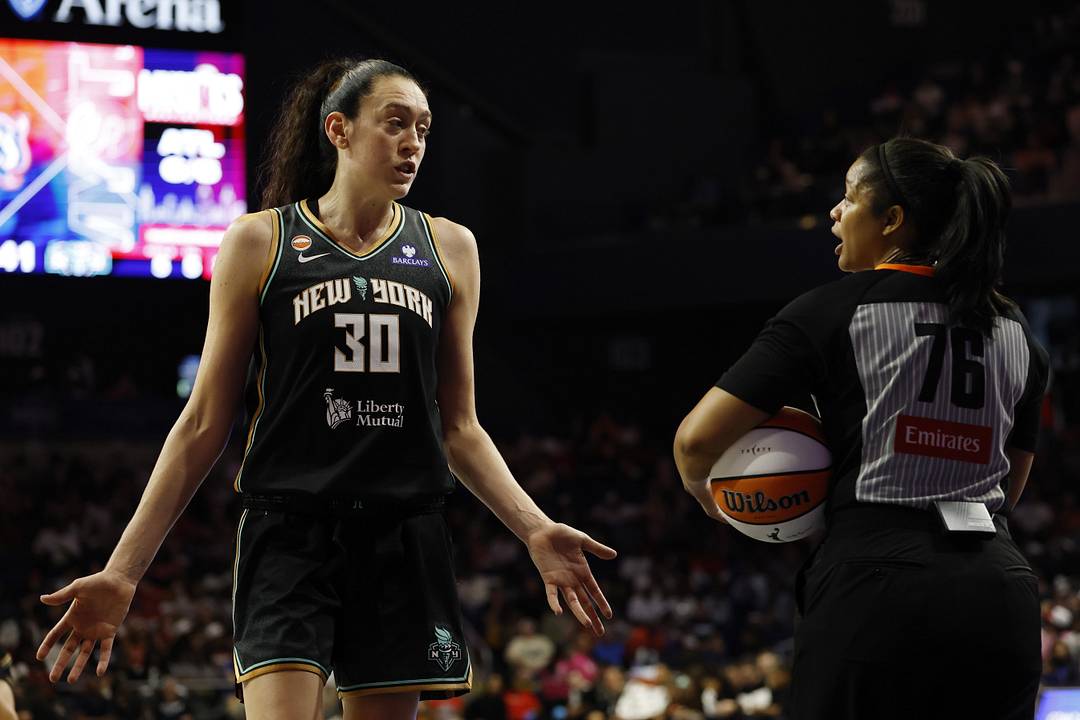
“It disrupts everyone’s flow,” Liberty forward Breanna Stewart said after several of her teammates fouled out in an overtime win against the Mystics. “This game was 2 hours and 41 minutes long. That’s insane… I know it’s going to take time of, like, figuring out what’s the standard of what’s going to be called, but there’s calls that are being called that are unnecessary on both sides, and then there’s no flow.”
There’s a parallel in the recent history of the NBA. The league chose to place a similar emphasis on freedom of movement in 2018—which boosted scoring, created a faster game and, in the long run, opened up conversations about the quality of defense and the state of the league as a whole. But the WNBA called for this emphasis from a markedly different position.
Most voices around the sport agreed that officiating had to change. Some of the WNBA’s most negative storylines and biggest public relations blunders over the last few years came from the frustrations with refereeing. (This is not currently a league at risk of getting complaints about how no one plays defense.) As players, coaches and referees alike make adjustments under the new guidelines, the discussions here will surely change. But there is little debate that some change was needed in the first place.
“This is what we want,” Fever coach Stephanie White said after Saturday’s loss to the Wings. “We need to overcorrect, so to speak, so that we have freedom of movement, so it’s a free-flowing offense. In all of our offseason, we have asked officials to call everything. The challenge and the question sometimes is: Is it consistent? So that’d be the next growth phase and growth area. But this is what we need to clean up, some of the stuff we saw last year.”
And if there are still questions—and there surely will be—coaches are heartened by the fact that most of them have come with answers so far.
“One thing that I’ve appreciated, honestly, is the dialogue between the officials and the head coaches,” Mystics coach Sydney Johnson said. “I certainly appreciate that. It’s never going to be that we see eye to eye, but them just being open to engaging and explaining calls, I think if that holds—I, for one, would be very, very appreciative of the influence that the task force has had.”
More WNBA from Sports Illustrated
 Add us as a preferred source on Google
Emma Baccellieri is a staff writer who focuses on baseball and women's sports for Sports Illustrated. She previously wrote for Baseball Prospectus and Deadspin, and has appeared on BBC News, PBS NewsHour and MLB Network. Baccellieri has been honored with multiple awards from the Society of American Baseball Research, including the SABR Analytics Conference Research Award in historical analysis (2022), McFarland-SABR Baseball Research Award (2020) and SABR Analytics Conference Research Award in contemporary commentary (2018). A graduate from Duke University, she’s also a member of the Baseball Writers Association of America.
Follow emmabaccellieri