%20%20--%3E%0A%3Csvg%20version%3D%221.1%22%20id%3D%22Layer_1%22%20xmlns%3D%22http%3A%2F%2Fwww.w3.org%2F2000%2Fsvg%22%20xmlns%3Axlink%3D%22http%3A%2F%2Fwww.w3.org%2F1999%2Fxlink%22%20x%3D%220px%22%20y%3D%220px%22%0A%09%20width%3D%2239px%22%20height%3D%2240px%22%20viewBox%3D%220%200%2039%2040%22%20enable-background%3D%22new%200%200%2039%2040%22%20xml%3Aspace%3D%22preserve%22%3E%0A%3Cpath%20fill%3D%22%23FFFFFF%22%20d%3D%22M38.5%2C7H28.2v26h10.3V7z%22%2F%3E%0A%3Cpath%20fill-rule%3D%22evenodd%22%20clip-rule%3D%22evenodd%22%20fill%3D%22%23FFFFFF%22%20d%3D%22M26.1%2C25.5c0%2C5.8-4.1%2C7.5-12.9%2C7.5C3.9%2C33%2C0%2C31.2%2C0%2C25.2v-1.1h11.6%0A%09v2.4c0%2C0.7%2C0.1%2C1.4%2C1.2%2C1.4c1%2C0%2C1.2-0.4%2C1.2-1.3v-0.9c0-1.6-0.9-1.6-3.5-2.2C2.2%2C21.7%2C0%2C19.7%2C0%2C15.3v-0.9C0%2C9.3%2C5.5%2C7%2C12.9%2C7%0A%09c10.2%2C0%2C12.8%2C2.6%2C12.8%2C7.4v1.8h-11v-2.9c0-0.6-0.4-1.1-1.2-1.1c-0.6%2C0-1.2%2C0.4-1.2%2C1.1v0.9c0%2C1.5%2C0.9%2C2%2C3.3%2C2.5%0A%09c8%2C1.6%2C10.5%2C3.3%2C10.5%2C7.5V25.5z%22%2F%3E%0A%3C%2Fsvg%3E%0A)
Albert Breer's Takeaways: Why Steelers (and NFL Fans) Need Another Year from Aaron Rodgers

Jump to a topic
- Aaron Rodgers
- Pittsburgh Steelers
- Denver Broncos
- Minnesota Vikings
- NFL, Refs' Association deal
- Philadelphia Eagles
- Breece Hall
- New Orleans Saints
- Odell Beckham Jr.
- Quick-hitters
The NFL schedule release is upon us this week, and we still have plenty to cover in the takeaways. Let’s dive in.
Aaron Rodgers
Year 22 is upon Aaron Rodgers—and if they can work a deal out with him, it’ll be on the Steelers to be good enough around him to make it one to remember. And part of that—again, if Rodgers and the team renew vows—is going to be about creating the sort of setup for the quarterback that acknowledges what he is and isn't at this stage of the game.
Rodgers can still play well, to be clear. But his game now is different than it was when he and new Pittsburgh coach Mike McCarthy last worked together seven years ago.
He can still sling it. He can see the field better than anyone in the league. But he’s also 42 going on 43 (in Dec.).
“His arm strength is still like it was 10 years ago—he can still throw it,” said one defensive coordinator who faced Rodgers last year. “His movement is what’s left him a little bit. He can still maneuver in the pocket, but he can’t get away the way he used to. His arm strength is what it always was. The difference is back in the day, you’d worry about him scrambling, getting out and creating explosive (plays). Now he can’t do that, and he doesn’t want to get hit.
“But he can still f---ing throw it.”
According to this particular DC, what you saw as the blueprint for attacking Rodgers last year was, when defenses got the Steelers in obvious passing situations, the focus was on changing the picture on him coverage-wise as much as possible and trying to get free rushers at him. The logic there: While you won’t fool him, you’re cooked if you give him the answers to the test. And if you can get him to hold the ball for a second longer and you can hit him, you can aggravate him.
Schematically, there was a shift too in how he was defended coverage-wise. In the past, when teams played him in man, it was usually with a single-high safety, then a spy to cover for all the defenders who had their back to the ball. Last year, the Steelers increasingly saw “2-man” looks—two safeties high and man coverage underneath—with opponents feeling less of a need to spy Rodgers the way defenses traditionally while having more freedom to do what they need to to get defenders around Rodgers’ feet.
That just means Rodgers must get the ball out quicker, often into smaller windows, and for the most part, he has been capable of doing that.
It also, however, puts more pressure on his teammates. The freedom teams feel to pressure Rodgers—with less concern that he’ll escape the pocket and hurt them either with his legs or down the field in those situations—puts stress on the line. It’s also a little tougher to get open. It makes defending him, in more simple terms, a lot like defending other quarterbacks.
So will this work? I think it can, but a lot of it will come down to the offense that Mike McCarthy designs for his old quarterback, the way D.K. Metcalf, Michael Pittman Jr., Pat Freiermuth and the rest of the skill guys come together and how a young line that’ll be led by its youthful right side—Zach Frazier, Mason McCormick and Troy Fautanu—jells.
I do know this: The NFL’s more entertaining and compelling with Rodgers in it.
Which is why, just as an observer of the sport, I’m hoping they can figure out the financial aspects to a new deal and we get to see him out there again.
Pittsburgh Steelers
The Steelers have telegraphed all this for a while. I understand why they’ve been so careful with what they’ve said in the interim. There’s no need to rock any boats before a deal is done, and Rodgers could simply hang ’em up—there’s really not much left he has to prove as a pro athlete. But they’ve very clearly anticipated all this.
Logically, this year made sense to rip off the Band-Aid and start a rebuild, maybe hire a 30-something coach the way they did in 1969 (Chuck Noll), 1992 (Bill Cowher) and 2007 (Mike Tomlin) and shed some age and gain some youth on the roster. The Steelers have made the playoffs in five of the last six years without a single postseason win over that stretch. Meanwhile, the core of the team has aged, which is why last year’s run with Rodgers felt like one last shot with that crew.
Instead, they’ve doubled down, again …
• They hired former Packers and Cowboys coach Mike McCarthy, who’s incredibly accomplished and proven, but way outside their normal mold—he actually became the oldest head coach in franchise history on the day of his hire.
• They re-signed franchise icon and 37-year-old defensive captain Cameron Heyward, and they’re bringing back T.J. Watt and Jalen Ramsey, both of whom turn 32 in October.
• They traded for Colts receiver Michael Pittman Jr., who became available when Indy awarded Alec Pierce with a healthy extension. Pittman turns 29 in October (two months before D.K. Metcalf also turns 29).
• They signed Jamel Dean, a cornerback who turns 30 in October; and Rico Dowdle, a running back headed into his seventh season in the pros.
It’s rare you see this sort of mix at the top of an NFL roster, and there’s a reason for that.
It’s certainly possible this all works out, and Rodgers is able to help weaponize the experience of all the guys around him, combining it with his own smarts and experience with all the background he has in McCarthy’s offense.
But it’ll take the Steelers not getting beat up and worn out like older teams tend to.
That will make how McCarthy ramps up his team through his first offseason back home in Pittsburgh really interesting. Again, this is assuming Rodgers ends up agreeing to terms.
Denver Broncos
George Paton’s new extension with the Broncos, which runs through 2030, is a win for common sense that’s often lacking in the NFL. When Denver landed Paton as its general manager in January 2021, it was considered a coup—other teams had come in looking to poach Rick Spielman’s right-hand man in Minnesota for years and, for a number of reasons, he often turned down even interviewing for those jobs. So it was a big win for the Broncos to lure him to be the de facto successor to John Elway atop their personnel department.
Two years later, with the hire of Nathaniel Hackett as the head coach having failed and the Russell Wilson trade already looking rickety, the landscape looked completely different. Sean Payton was coming in to solve a near-decade of organizational malaise. And Paton’s days were numbered.
Or so everyone thought.
Three years after that, here we are. Wilson is gone. Payton has retaken his place among the game’s best coaches. And—surprise!—with an ascension in record and playoff standing in each of the last three years, Paton is running right alongside him, helping lead the Broncos back to familiar ground as one of the NFL’s most stable franchises.
So how did that happen? Big picture, it’s a really good head coach working in tandem with a really good GM to build a really good team. On a more granular level, it’s really what it usually is in situations like these: a strong head coach creating a very precise vision for his program and what he and his coaches are looking for at every position, which weaponizes the personnel department to go find the right players for the roster.
That started with a series of meetings in early 2023, when Payton and his staff spelled all that out very clearly, which allowed for the personnel staff to create a foundation.
It was first apparent in a free-agent class that was headlined by offensive linemen Ben Powers and Mike McGlinchey and defensive lineman Zach Allen, in addition to a trade for another defensive lineman, John Franklin-Myers. Those acquisitions reflected Payton’s belief in building through the trenches, and all of those players had the makeup the new head coach demanded. Three of the four will be going into their fourth season as starters in Denver this fall, with the one exception, Franklin-Myers, having left for a blockbuster deal in Tennessee.
From there, they gave Wilson a year then cut ties with him—dead cap and guaranteed money be damned—and drafted and developed well enough to make up for the financial fallout that hit in 2024 and '25. Through those two years, while working through nine figures of dead cap charges (from Wilson and others), and with a starting quarterback (Bo Nix) in his first two years, Denver made the playoffs for the first in a decade. They followed that up by going 14-3 last season, winning the No. 1 seed in the AFC, before losing in the AFC title game with a backup quarterback starting.
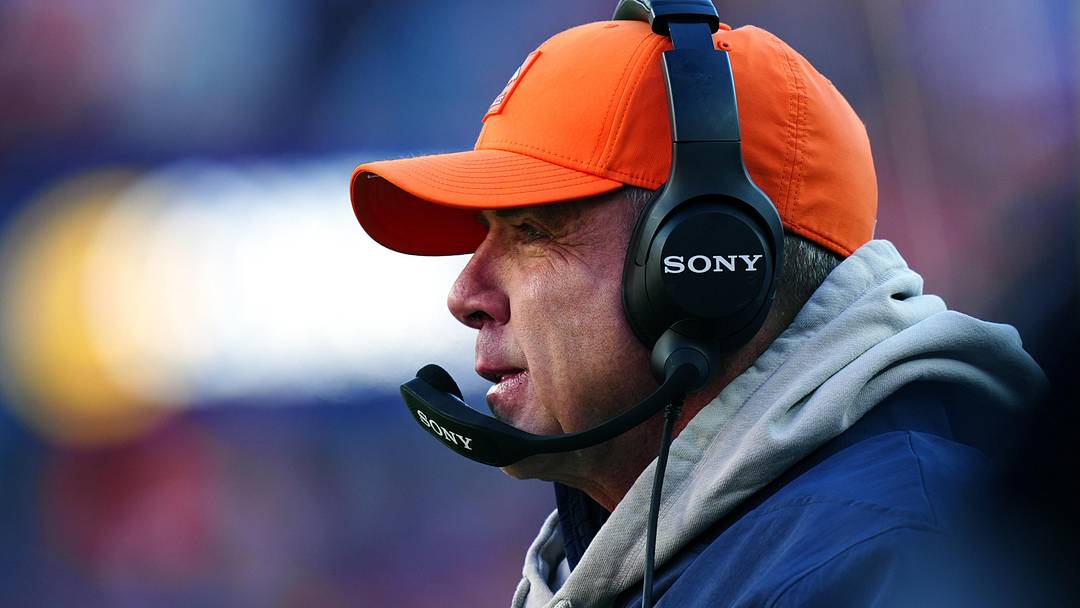
Finally out from under all the fiscal implications of the Wilson deal, and even without the two first-round picks lost in that deal and another one dealt to New Orleans for Payton himself, the Broncos are now set up to sustain what they’ve done the last two years.
Paton deserves a lot of credit for it, and how it worked in Denver has become a sort of model for the Eliot Wolf/Mike Vrabel pairing in New England, and the new Joe Schoen/John Harbaugh tandem in New York. In each case, ownership resisted the outside pressure and the urge to keep good people aboard as a powerful head coach was brought in.
Safe to say now the approach certainly worked for Greg Penner and the Broncos owners.
Minnesota Vikings
The Vikings' general manager search is going to go down one of two roads. The first is that the team simply elevates EVP of football operations Rob Brzezinski, who has been with the organization since 1999, into the full-time role after he served there in the last three months on an interim basis. The second, to me, is a bit more interesting.
It would lead Minnesota down a road that teams are starting to take in setting up their football sides—in which the traditional role of GM is divided up, largely on the premise that it has become a big enough job to necessitate multiple people handling its responsibilities.
The Rams are one team that has been set up this way for a long time, with first Kevin Demoff and now Tony Pastoors working as football-operations chief alongside GM Les Snead, who leads the player personnel side. The Lions, who hired Brad Holmes away from the Rams, adopt a similar setup, pairing Holmes with EVP of football operations Mike Disner. Carolina has gone down that road, too, teaming GM Dan Morgan with KC import Brandt Tilis.
Those three organizations have had success with the model. The Rams’ success speaks for itself, the Lions revived a long-dormant team and fan base, and the Panthers showed a lot of signs last year of doing the same thing. The Niners are modeled a bit differently, but they’re another team that has had a football operations head, Paraag Marathe, matched with a GM, John Lynch, and empowered as part of the team-building mix.
That’s why when six assistant GMs emerged last week as candidates—the Chargers’ Chad Alexander, 49ers’ RJ Gillen, Bills’ Terrance Gray, Rams’ John McKay, Seahawks’ Nolan Teasley and Titans’ Dave Ziegler all got interview requests—it made perfect sense that all six came from the scouting side. Each would pair well with Brzezinski in that new-age sort of setup, one that, it should be noted, Vikings coach Kevin O’Connell got to see at work in his two years with the Rams.
We’ll see which way this goes. Doing it that way would require buy-in from Brzezinski, of course. But it’d make plenty of sense if they can get that.
NFL, Refs' Association deal
The NFL/NFLRA accord should provide the players with a valuable lesson: The owners are willing to pay for something they really want. I’ve been hard on the 31 guys (plus the Packers) in charge over the last few years for what I believe has evolved into a private-equity sort of mindset in running the league, one that values profits and financial growth over pretty much everything else. And I stand by those criticisms.
But if you dig into how the officials’ new CBA, a seven-year deal that’ll run through the 2032 season and expire on May 31, 2033, was negotiated, you’ll find an interesting anecdote.
After talks broke down in late March, with the officials frustrated that the NFL’s negotiators weren’t empowered to, you know, negotiate, the guys with the power to do whatever they want to then came to the table. And to the credit of Dallas’ Jerry and Stephen Jones, Kansas City’s Clark Hunt and Tampa Bay’s Joel Glazer, they came ready to enact real change, with the message that they’d be more than willing to reach into their pockets to create that change.
Sick of getting publicly flogged for officiating every Monday through the fall and winter, and concerned about a 2012 referee lockout redux, the owners pushed for more measures from the start that would lead to a higher level of performance and accountability if there was failure to reach that level. Once the owners themselves made it to the table, they showed how badly they wanted it, giving the officials a significant bump in pay and benefits on just about every level in exchange for more training, more access, more standards and a bench.
Again, credit goes out to the owners for going there and landing a deal that should be good for everyone, in particular an audience that, thanks to the quality of the broadcasts now, can see more mistakes in real time than ever before.
So to circle back, what can the players take from this? Easy. Figure out what the owners really want (i.e. 18 games) and make them pay for it, and not with time off or something else they don’t really care that much about. Make them actually pay for it.
Philadelphia Eagles
I can’t wait to see what the Eagles do with Uar Bernard. If you’re not familiar, Google him. I’m not sure I’ve ever seen a human being like him. The 21-year-old Nigerian is listed as 6’ 5” and 306 pounds, and at his pro day, he ran a 4.63 40-yard dash, posted a 39-inch vertical and broad-jumped 10’10”. And when I say Google him, I’m not referencing those numbers. Click on the images tab and I’m telling you, you’ll be stunned that a 306-pounder can look like that.
Philly took a flier on Bernard—who’s a part of the NFL’s International Player Pathway Program—in the seventh round of the draft, the same way they once took a flier on a freak athlete of a rugby player from Australia named Jordan Mailata. Seven years after the Eagles threw a seventh-rounder at Mailata, who, like Bernard, had never played football, I sat with owner Jeffrey Lurie the day before Mailata started his second Super Bowl.
He compared drafting Mailata to his beloved Celtics spending a top-10 draft pick on Larry Bird in 1978, knowing they wouldn’t get him until 1979.
“This goes back a little to the Larry Bird example,” said Lurie. “Could we say he’s the 53rd player on the roster no matter what for the next three years? That was the attitude. We’re just going to develop him. He didn't even know what the shape of an American football looked like. We knew he was a good person. He was very young. We didn't want to take a chance not drafting him.
“Howie [Roseman] did an incredible job. We didn't have a seventh-round pick, and he and I sort of got together and said, ‘We have to not take this to chance, the upside is too great; let’s find a way to get a seventh-round pick.’ So we [traded for] a seventh-round pick and took Jordan. I mean it was all about development. It was identifying through our coach Jeff Stoutland the physical potential. It was also just allocating, saying the first two or three years may not be great, but he’s our 53rd player no matter what. There’s not ever going to be a discussion of him not being on the roster.
“Stout and those guys just did a phenomenal job of developing him. That’s a success story. You do it sometimes and it doesn’t work, but then it goes back to that philosophy of keep doing it because you’re doing it the right way.”
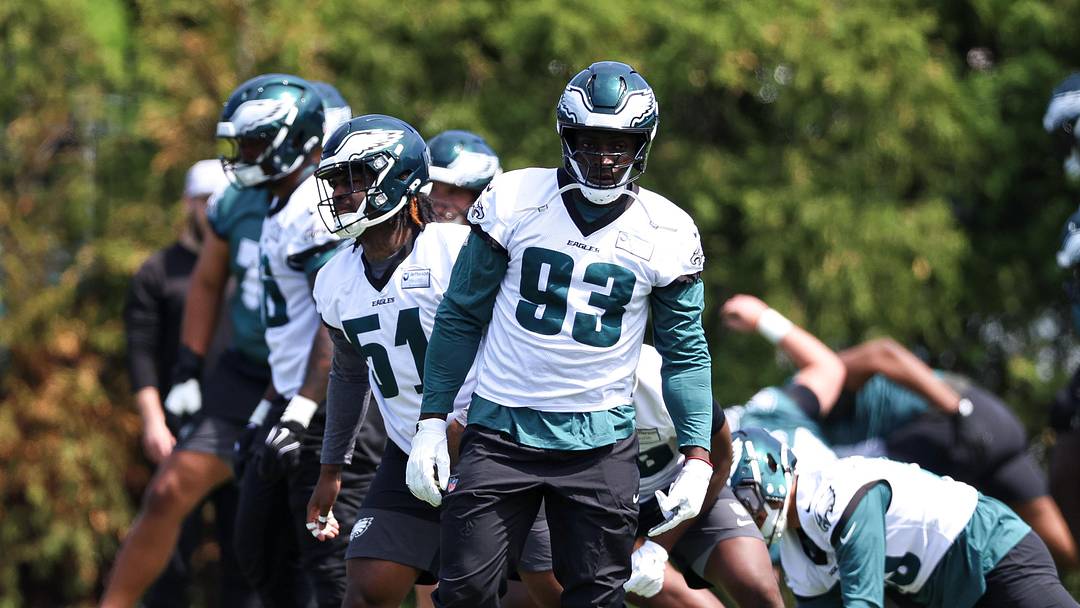
It happens because the Eagles have an ex-player in Conor Barwin who does a really good job of making sure the guys who aren’t playing 50 snaps on Sundays are developing. And that's because the Eagles invest in assistant position coaches behind the primary position coaches to keep those guys working when the team’s focus turns to the games in the fall, and because the personnel department doesn’t overthink it when a special athlete is there.
That’s why no one should be surprised if the Bernard gamble works out.
And even if it doesn’t, there’s a chance the next one does.
Breece Hall
The Breece Hall contract would be a pretty easy one for me to do, if I were the Jets. I had a really sharp executive years ago point out to me the inequities in how running backs are paid at a time when the position’s value was plummeting. We were at a practice. He gestured to his team’s No. 1 receiver and pointed out that, on a good day, he’d touch the ball six or seven times. Then he pointed at his workhorse back, who’d routinely touch it 15-20 times per game.
He conceded that , sure, it was oversimplistic to look just at that. There’s a lot more to it based on how each position affects the defense and how replaceable each guy was. Still, he said, why should it be that the back would make a fraction what the receiver did.
It’s with as a backdrop that I’ll point out the value of Hall to the Jets.
The fifth-year back was in the same draft class as Garrett Wilson. Hall’s deal came in at an average of $15.25 million per year. Wilson, who got his extension a year earlier despite the team holding a fifth-year option on him for 2026, got a new-money average of $32.5 million.
Hall has 943 touches in 56 career games, which is an average of 16.8 per game. Wilson, meanwhile, has 325 touches in 58 career games, an average of 5.6.
So Hall is making less than Romeo Doubs is with the Patriots or Jayden Reed is with the Packers (to pick out two receivers), and touching the ball about three times as much, on average, as his team’s best receiver. And the Jets can get out of the three-year deal easily after two years.
Position value is what it is … but on what planet is that not a steal for the team?
New Orleans Saints
Along those lines, the Saints, with ex-Eagles OC Kellen Moore among the chief decision-makers, had a really interesting Day 2 of the draft.
You know by now about the unique athletic traits that receiver Jordyn Tyson brings to the table as New Orleans’ first-round pick. What you might not know is Moore and GM Mickey Loomis made similar bets in chasing the ceiling of guys with big-time ability, if not production, in the second and third rounds, too.
And here, to me, is the cool twist to all this: Those bets on second-round DT Christen Miller and third-round TE Oscar Delp are also gambles on the Georgia program.
There’s no arguing the job HC Kirby Smart has done in elevating the Bulldogs from a very good program to one of America’s best over his decade in charge, with two national titles, four SEC championships and six SEC East crowns to his credit. The guys who’ve come out from under his watch into the NFL are as battle-tested as you can be coming from college, both in how Smart’s players have to work and who they play against.
But often his teams are so talented that supremely gifted athletes are giving of themselves to do dirty work that may not always fully highlight their NFL traits. Ladd McConkey would be one example, as a guy who never had even 800 receiving yards in a season in college, then went for 1,149 as an NFL rookie. Texans star cornerback Kamari Lassiter is another, and former first pick defensive end Travon Walker is in that category as well.
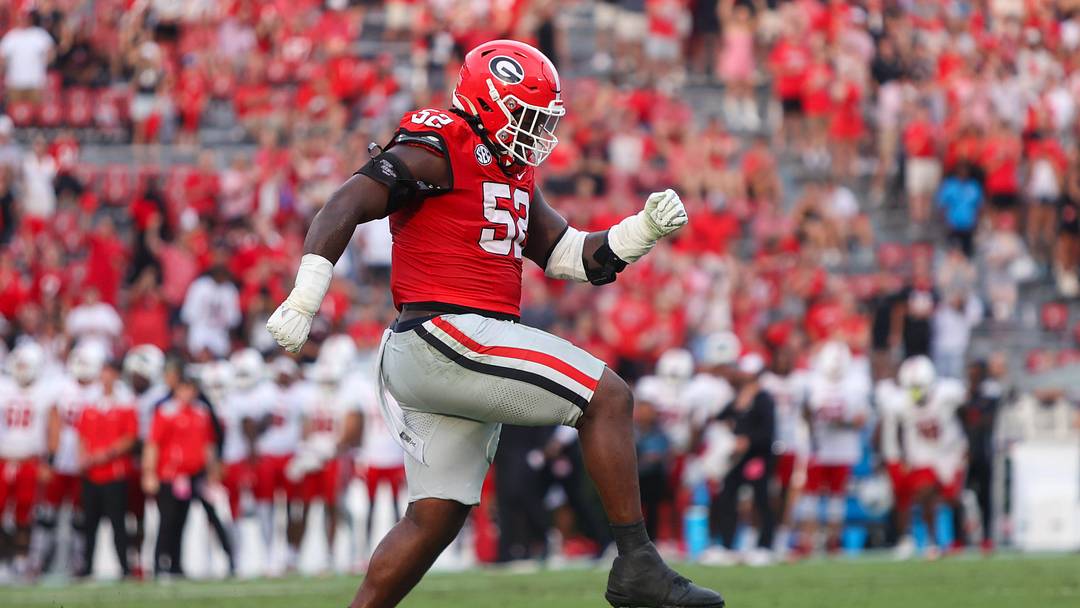
The Saints saw Miller and Delp similarly. Miller had just four sacks over three collegiate seasons (he redshirted in 2022), but showed on tape flashes of the kind of athleticism that could project to a 3-technique role. He didn’t test pre-draft because of a hamstring issue, but ran a 4.9 40 at 321 pounds at his junior day last spring. Delp, on the other hand, did test and had a relative athletic score of 9.82 out of 10, which ranked 26th of 1,388 tight ends to come out since 1987. Delp also never even got to 300 receiving yards in a college season.
As such, it’s fair to say that both have some meat left on the bone developmentally.
We’ll see if the Saints can pull more out of them.
Odell Beckham Jr.
The Giants' tire-kicking on Odell Beckham Jr. is fun, so long as you can keep proper perspective on what this is. Beckham is one of these guys that I believe fans see as forever young, maybe mostly because of his spirit, the potential he once had and the style of play that looked a little different back when he was young compared to anything we’d ever seen.
No one should confuse that with Beckham actually being some sort of prospect.
The facts …
• Beckham is heading into what would be his 13th NFL season, had he not sat out the 2022 and '25 seasons.
• Beckham will turn 34 in November.
• His last 1,000-yard season came in his first season with the Browns in 2019. It was also the last time he even had 600 yards in a season.
• The last time he had even 20 receiving yards in a game was in December 2023.
Now, the good news is that he showed a willingness to fit in as a bit player in Miami two years ago, and the last time he had any sort of level of consistent productivity was in Baltimore under John Harbaugh, who’s now, of course, with the Giants.
So do I think this can be a really cool story of a guy who just wants to play football again?
I do. And I’m all for it becoming that. But let’s not turn it into something it’s not.
Quick-hitters
• On the schedule release, I’ll be interested to see what they do with Christmas weekend and whether they pull three games out for that Friday of Christmas Day and have Thursday Night Football on Christmas Eve, plus games on that Saturday. You could be talking, if you include Monday Night Football, pulling seven games out of that Week 16 Sunday. Which, when you count SNF, would leave only eight games for the two Sunday afternoon windows.
• That, to me, might also be a window into how far they could be willing to pull apart the traditional Sunday afternoon game slots, which are what most people think of when they think of the NFL, to create more monetizable windows for the next set of broadcast deals.
• I don’t have a ton of hope for Anthony Richardson Sr., if we’re being honest. But I do think remaining with the Colts for now does create an opportunity he wouldn’t have elsewhere to get first-team reps as Daniel Jones makes his way back from Achilles surgery.
• Clearly, this will be an important fall for Michael Penix Jr. One thing that should help him is having Falcons president of football Matt Ryan around as a sounding board. For what it’s worth, I did hear that Ryan did like Penix’s tape when folks asked him about the 2024 draft’s quarterbacks.
• ESPN’s Seth Wickersham had a good story on the Seahawks’ sale and the market being a little softer than expected, which is almost certainly a result of how the skyrocketing prices of teams have limited the number of folks capable of buying. As such, the two names I’ve heard most consistently tied to this sale have been Boston Celtics limited partner Aditya Mittal and Canadian billionaire Steve Apostolopoulos.
• I also wonder if this sale is the one that might force some changes in the rules on buying teams. As it stands now, there has to be a controlling owner of each team that holds at least 30%. I love the premise of that, which is that there needs to be someone accountable to both the fans and the league for the fate of each team. But you do wonder when we get to the point where buying that big of a chunk of one of these teams becomes a bridge too far for too many potential buyers, and we see more Dodgers-style consortiums in play.
• I’m really intrigued by the Mike McDaniel/Justin Herbert union in Los Angeles. Here’s a list of the full-time starting QBs McDaniel has worked with in the NFL: Matt Schaub, Donovan McNabb, Rex Grossman, Robert Griffin III, Brian Hoyer, Matt Ryan, Jimmy Garoppolo, Brock Purdy and Tua Tagovailoa. There are some really good players in there, and Ryan won an MVP in the years McDaniel was in Atlanta. But I think Herbert’s a different animal for him versus what he’s had at the position in the past.
• Jauan Jennings’ signing in Minnesota is interesting, in that he took way less than he was shooting for. After all, money was what ultimately led to him becoming disgruntled in leaving San Francisco. So will he be happy with so many mouths to feed in the Vikings’ offense, and another receiver, Jordan Addison, playing for a contract? We’ll see. It’s a golden opportunity for him to turn perception a bit, if he can fit in.
• Tyrod Taylor is headed to Green Bay for his 16th NFL season, and he's again showing the value of being seen as a good guy who people want to have in their quarterback room. I’d argue that Josh McCown probably made an extra $30 million or $40 million at the end of his career, just because he was that kind of teammate and worker. And as far as that goes, I bet Taylor will be a very valuable resource for Jordan Love.
• Finally, all the best to all the social media teams putting together the schedule-release videos this week. Can’t wait to dig into those and all the hidden (or not-so-hidden) shots the 32 of them take at each other.
More NFL on Sports Illustrated
 Add us as a preferred source on Google
Albert Breer is a senior writer covering the NFL for Sports Illustrated, delivering the biggest stories and breaking news from across the league. He has been on the NFL beat since 2005 and joined SI in 2016. Breer began his career covering the New England Patriots for the MetroWest Daily News and the Boston Herald from 2005 to ’07, then covered the Dallas Cowboys for the Dallas Morning News from 2007 to ’08. He worked for The Sporting News from 2008 to ’09 before returning to Massachusetts as The Boston Globe’s national NFL writer in 2009. From 2010 to 2016, Breer served as a national reporter for NFL Network. In addition to his work at Sports Illustrated, Breer regularly appears on NBC Sports Boston, 98.5 The Sports Hub in Boston, FS1 with Colin Cowherd, The Rich Eisen Show and The Dan Patrick Show. A 2002 graduate of Ohio State, Breer lives near Boston with his wife, a cardiac ICU nurse at Boston Children’s Hospital, and their three children.