%20%20--%3E%0A%3Csvg%20version%3D%221.1%22%20id%3D%22Layer_1%22%20xmlns%3D%22http%3A%2F%2Fwww.w3.org%2F2000%2Fsvg%22%20xmlns%3Axlink%3D%22http%3A%2F%2Fwww.w3.org%2F1999%2Fxlink%22%20x%3D%220px%22%20y%3D%220px%22%0A%09%20width%3D%2239px%22%20height%3D%2240px%22%20viewBox%3D%220%200%2039%2040%22%20enable-background%3D%22new%200%200%2039%2040%22%20xml%3Aspace%3D%22preserve%22%3E%0A%3Cpath%20fill%3D%22%23FFFFFF%22%20d%3D%22M38.5%2C7H28.2v26h10.3V7z%22%2F%3E%0A%3Cpath%20fill-rule%3D%22evenodd%22%20clip-rule%3D%22evenodd%22%20fill%3D%22%23FFFFFF%22%20d%3D%22M26.1%2C25.5c0%2C5.8-4.1%2C7.5-12.9%2C7.5C3.9%2C33%2C0%2C31.2%2C0%2C25.2v-1.1h11.6%0A%09v2.4c0%2C0.7%2C0.1%2C1.4%2C1.2%2C1.4c1%2C0%2C1.2-0.4%2C1.2-1.3v-0.9c0-1.6-0.9-1.6-3.5-2.2C2.2%2C21.7%2C0%2C19.7%2C0%2C15.3v-0.9C0%2C9.3%2C5.5%2C7%2C12.9%2C7%0A%09c10.2%2C0%2C12.8%2C2.6%2C12.8%2C7.4v1.8h-11v-2.9c0-0.6-0.4-1.1-1.2-1.1c-0.6%2C0-1.2%2C0.4-1.2%2C1.1v0.9c0%2C1.5%2C0.9%2C2%2C3.3%2C2.5%0A%09c8%2C1.6%2C10.5%2C3.3%2C10.5%2C7.5V25.5z%22%2F%3E%0A%3C%2Fsvg%3E%0A)
2026 NBA Mock Draft: Where Top Players Land After Wizards Win Lottery

In this story:
The NBA draft lottery is in the books, with the ping-pong balls bouncing the Wizards’ way after a few years of lottery disappointment. It could go down as a franchise-changing moment for Washington as well as several other teams in a very strong draft (particularly at the top).
Plenty could change as teams meet with players at the NBA combine in Chicago this week, attend workouts and better deduce the best fits for their situations. But with the draft order officially set, here’s an early look at how the first round could shake out.
1. Washington Wizards: AJ Dybantsa, BYU
Washington winning the lottery gives it the right to choose Dybantsa, the 6' 9" wing who is perceived to be the leader to go No. 1 as the predraft process takes center stage over the next six weeks. It’s hard to argue with drafting a player who perfectly fits the mold of many of the league’s current superstars. He’s a dynamic athlete who can create his own shot, score at an elite level and showed real growth in his consistency as a decision-maker in his lone year of college at BYU. If he can continue to sharpen his handle and adaptability against different defensive coverages, his offensive game will continue to explode into one of the NBA’s dominant forces. For Washington, Dybantsa could fit in nicely as an elite scorer on the wing around a young core that features Alex Sarr up front and shotmakers Will Riley and Tre Johnson in the backcourt.
2. Utah Jazz: Darryn Peterson, Kansas
Peterson is likely the biggest challenger to Dybantsa for the No. 1 pick. He has a key week ahead as NBA teams get the chance to review his medicals and interview him during the combine to better understand the bumpy season he had at Kansas. In a recent interview with ESPN, he attributed the cramping issues that caused his on-again, off-again season to creatine usage. Peterson has largely drawn strong marks for his competitiveness, work ethic and desire to play in spite of the season’s chaos, but those concerns overshadowed an electric season as a scorer in spite of those legitimate health bumps.
The calculus for Utah should be relatively simple: whichever of Dybantsa and Peterson is available is the easy choice. With Jaren Jackson Jr. and Lauri Markkanen in tow, a power forward like Cameron Boozer or Caleb Wilson doesn’t make much sense. Peterson, Isaiah Collier and Keyonte George would be an elite backcourt to watch.
3. Memphis Grizzlies: Cameron Boozer, Duke
Boozer is the ultimate winner in this draft class, stacking unbelievably consistent production and team success throughout his career. His athletic profile isn’t quite as appealing as the other elite prospects in this class, but that may not matter for the Grizzlies. Memphis is one of the league’s most analytically conscious organizations in the predraft process, and Boozer’s profile on paper has nearly broken analytical models around the league. Boozer has made real progress rounding out his offensive game to become a high-level floor spacer and passer in addition to how he physically dominates around the rim. He’s a piece to build around for the Grizzlies.
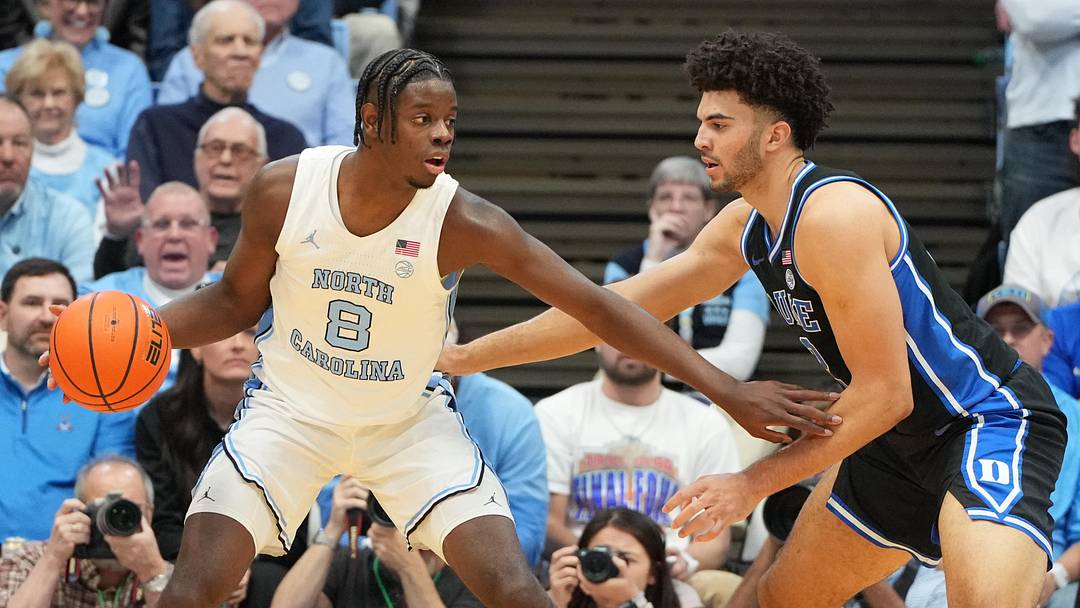
4. Chicago Bulls: Caleb Wilson, North Carolina
Wilson’s freshman season at North Carolina came to a crushing end after a pair of hand injuries shut him down in February. He made a lasting impression on scouts and executives with his explosive athleticism and elite motor. He stacked up double-doubles in many cases based on pure effort, flying around above the rim for dunks, blocks and rebounds. The three-point shot is a key swing skill for Wilson and something he’ll likely need to become consistent with in order to return top-three value, but he’s certainly in play to climb above the No. 4 slot over the next month or so.
Chicago jumping up from ninth-best odds to a top-four pick gives it a chance to take one of the most dynamic athletes in the class in Wilson and a potential franchise cornerstone.
5. Los Angeles Clippers: Keaton Wagler, Illinois
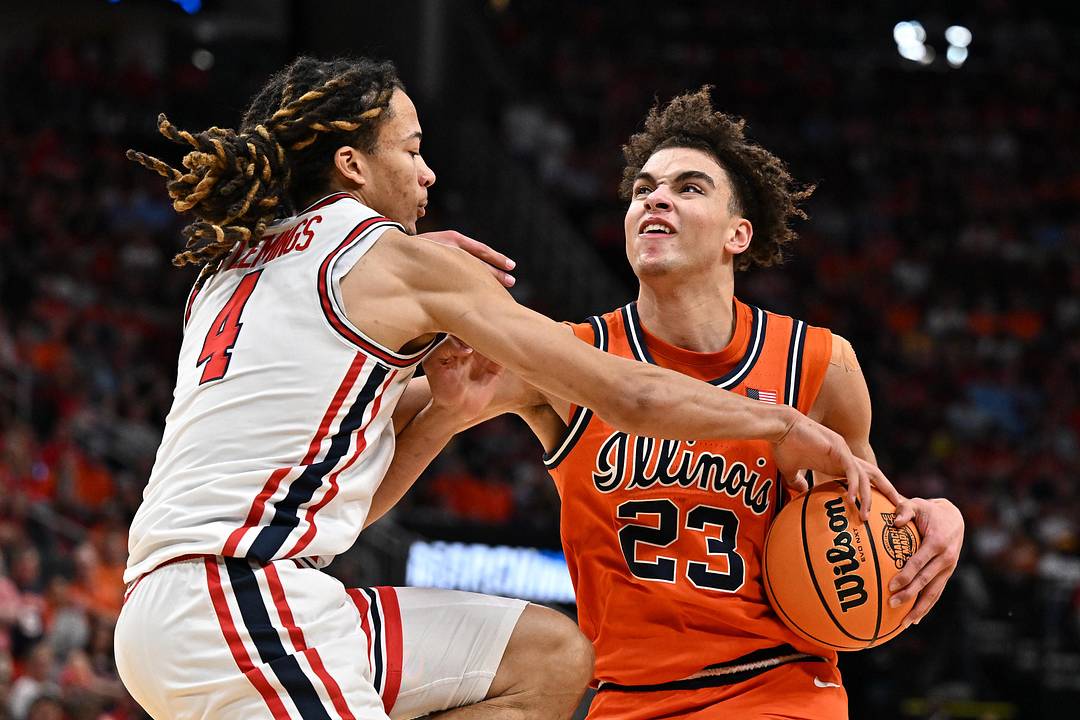
Wagler has earned comparisons to Pacers guard Tyrese Haliburton as a former underrated recruit whose off-dribble shooting and playmaking made him a college star. He’s a limited athlete who doesn’t play above the rim and lacks strength, but that didn’t stop him from dominating arguably the best conference in college basketball with his consistent ability to make the right play, put teammates in the right spots and his killer instinct late in games. He’s a special shooter off the bounce and has made incredible strides in one year with his ability to create space for himself off the dribble and finish around bodies at the rim, encouraging signs for his developmental trajectory.
The Clippers traded for Darius Garland midseason, but many of the top players on the board at No. 5 will likely be point guards. A bigger guard like Wagler who can slide on and off the ball likely makes the most sense from a fit standpoint.
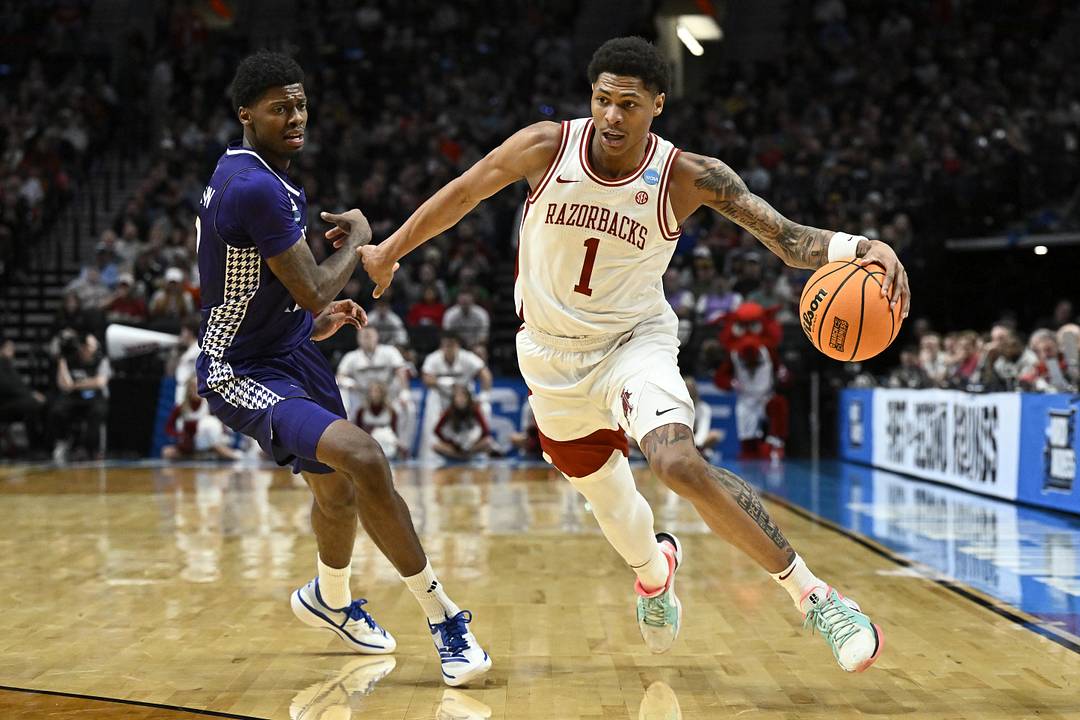
6. Brooklyn Nets: Darius Acuff Jr., Arkansas
Acuff is the first high-major player to average at least 23 points and six assists per game since Trae Young, and Acuff did so more efficiently (44% from three vs. 36%) and on a better team than Young did. While the two have their differences (Acuff is a thicker, more muscular guard and Young was a better pure passer coming out of college), it’s easy to draw comparisons between the two as prospects. Acuff’s ceiling, like Young at points in his career, is to be one of the top offensive engines in the league, an elite scorer who can do it efficiently even against the best defenses in the NBA. But undersized ball-dominant guards can quickly become toxic assets on monster contracts, as the Hawks experienced with Young of late before his eventual trade to the Wizards.
Brooklyn can’t be thrilled to drop out of the top four, but Acuff falling to them at the No. 6 pick would be a win of sorts. The Nets have collected plenty of connective pieces in recent drafts (namely 2025 No. 8 pick Egor Demin) and could add their high-usage offensive anchor in Acuff.
7. Sacramento Kings: Mikel Brown Jr., Louisville
It was an uneven college stint for Brown, who dealt with lingering back injuries that saw him bounce in and out of the lineup for Louisville while the draft’s other top point guards put up monster numbers. That said, he may have the highest upside of the point guards in this class given his size, explosiveness off the dribble and shooting potential. He looked like a potential top-five pick after dominating the all-star circuit and U19 World Cup last spring and summer, events scouts will certainly remember especially if his medicals check out. This would give the Kings a potential cornerstone at the point to build around.
8. Atlanta Hawks: Kingston Flemings, Houston
The fourth point guard off the board is Flemings to Atlanta. The San Antonio native had a monster lone college season at Houston, wowing scouts with his speed in the open floor, intensity on the defensive end and most importantly, his passing ability. He made tangible strides as a shooter while playing for the Cougars, though there are still some long-term concerns about how consistent a threat he’ll be from beyond the arc. Atlanta may be positioned to simply take whichever of this run of point guards is still available when its pick comes around and would be happy to land its potential floor general of the future.
9. Dallas Mavericks: Brayden Burries, Arizona
Burries emerged as one of the best scorers in college basketball after a slow start to his freshman season at Arizona. He can create his own shot, space the floor off the ball and proved to be a pretty effective defender as well at times. He looks like a clear lottery-level prospect and the fit makes sense with Cooper Flagg in Dallas as someone who can come on and off the ball, space the floor, and provide some scoring upside.
10. Milwaukee Bucks: Nate Ament, Tennessee
Ament averaged nearly 17 points per game on a Tennessee team that made the Elite Eight, but it was a mixed season at best for his draft stock. Teams love his size and ceiling as a shooter, but he’s not the most explosive athlete and struggled at times with the physicality of the SEC. For the Bucks, this is the type of big swing that isn’t always available in the back half of the lottery, valuable given the uncertainty surrounding Giannis Antetokounmpo’s future and the difficult salary cap situation Milwaukee finds itself in. And at worst, Ament should have a reasonable floor as a jumbo wing who can space the floor and add value as a low-end starter or good reserve.
11. Golden State Warriors: Yaxel Lendeborg, Michigan
At 24 years old by the time he makes his NBA debut this fall, Lendeborg should be one of the most game-ready prospects in the class. His ability to guard up and down the lineup (including shutting down some of the top point guards in the country), dominance in transition and versatile offensive game makes him an intriguing option. With the Warriors extending Steve Kerr and looking to get back into contention quickly, the opportunity to add an instant-impact option who could play in a playoff game tomorrow might be hard to pass up.
12. Oklahoma City Thunder: Aday Mara, Michigan
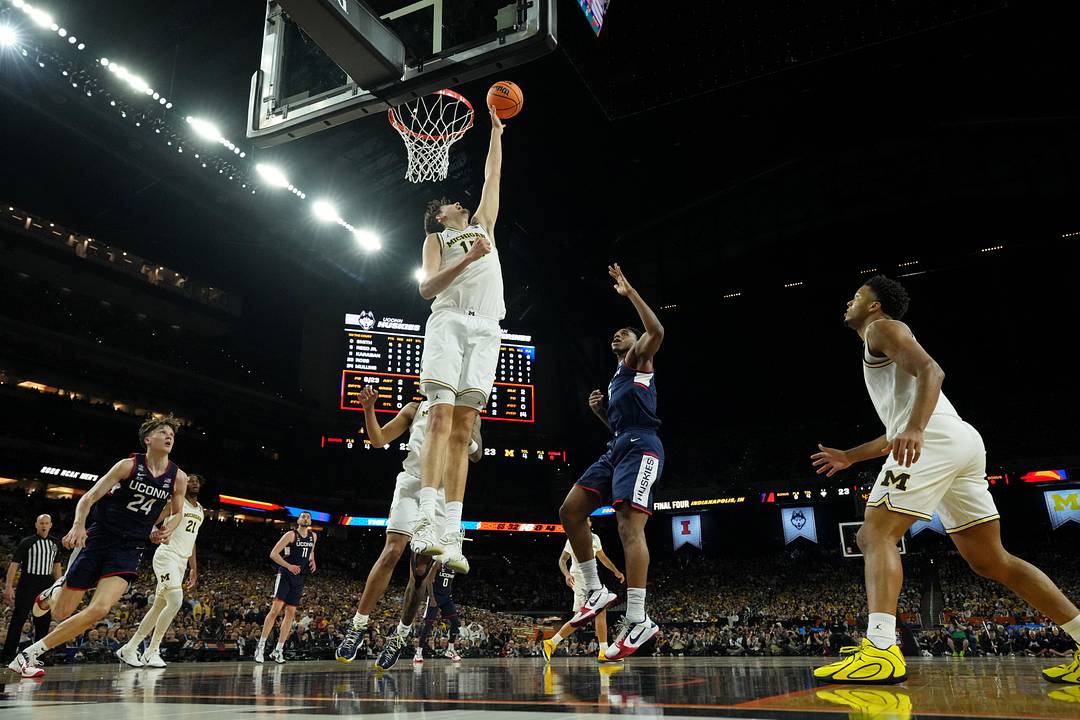
Few players in this range of the draft have the potential to be as game-changing off the bench as Mara, who dominated the NCAA tournament for Michigan thanks to his elite ability to protect the rim. With Isaiah Hartenstein potentially entering free agency (he has a $28.5 million team option for next year), the opportunity to bolster the frontcourt might be hard to pass up.
13. Miami Heat: Labaron Philon Jr., Alabama
Few players in college basketball were more entertaining to watch this season than Philon, a dynamic point guard who has proven to have elite potential as both a scorer and distributor. He thrived in Alabama’s fast-paced offense and is electric in the open floor, gifts that could make a major impact for the Heat.
14. Charlotte Hornets: Karim López, New Zealand Breakers
López has spent the last two years as a useful starter for the New Zealand Breakers in Australia’s National Basketball League, showing the high-level role player utility he projects to bring to the NBA. He has great size at 6' 9" and a good feel for the game with the ability to make catch-and-shoot threes. This isn’t the highest-upside pick, but he’s a ready-made role player with defensive versatility and shooting upside and is just 19 years old. He could help the Hornets as they continue to push towards contention.
15. Chicago Bulls: Hannes Steinbach, Washington
It’s hard to argue with Steinbach’s production in the last 365 days, stacking double-doubles with the German U19 team last summer before putting up huge numbers on a disappointing Washington team. Steinbach may struggle defensively at the next level due to mobility concerns, but seems to have a fairly stable floor as an ultra-consistent rebounder with soft touch around the rim and some pick-and-pop potential. The fit would also be very strong with Steinbach and Wilson together as the Bulls’ frontcourt of the future, insulating some of Steinbach’s athletic limitations and Wilson’s shooting struggles.
16. Memphis Grizzlies: Christian Anderson, Texas Tech
Anderson’s monster sophomore season at Texas Tech solidified him as a first-rounder, leading the Big 12 in assists and drilling over 100 threes. He’s a gifted off-dribble shooter and savvy in ball screens, helping outweigh some of his physical limitations. He could be the point guard of the future in Memphis if the Grizzlies eventually decide to trade Ja Morant, but could fit in behind him early on if they elect to stand pat.
17. Oklahoma City Thunder: Jayden Quaintance, Kentucky
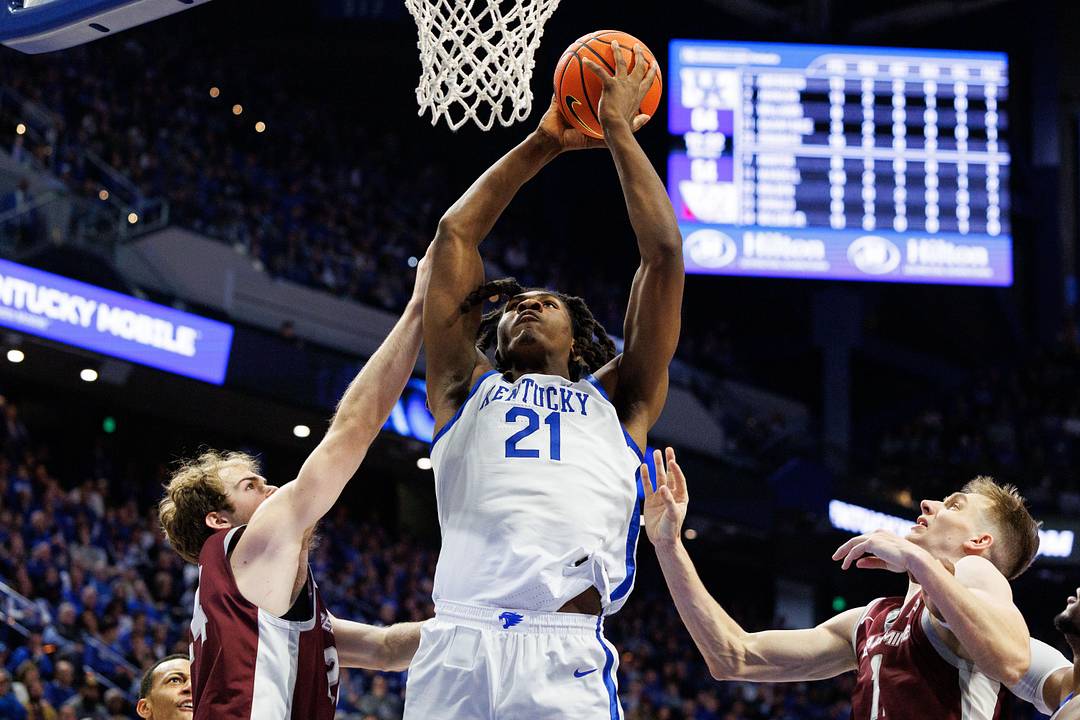
Quaintance barely played this season at Kentucky as he recovered from an ACL tear suffered late in the 2025 season at Arizona State. His ceiling is enormous if everything breaks right with incredible length, huge hands and elite shot blocking instincts. Teams will be keen to find out more about his medical situation throughout the combine and predraft process, but a team like Oklahoma City with tons of assets could roll the dice.
18. Charlotte Hornets: Cameron Carr, Baylor
Carr had the breakout season scouts have been waiting for this year at Baylor, finally wedding his impressive physical tools as a three-and-D wing into elite production. He averaged close to 19 points per game and shot the ball at a high level, but possesses real upside given his athleticism. That combination of length, explosiveness and shooting should help him throughout the predraft process.
19. Toronto Raptors: Bennett Stirtz, Iowa
Stirtz may not have quite the same ceiling as some of the other point guards in this class, but it’s hard to bet against a guy who climbed from Division II to one of the best players in the Big Ten. He has good positional size, makes great decisions and should be a high-level shooter in the NBA especially in a lower-usage role than the one he played at Iowa. He should be able to make an impact immediately for a team like Toronto that could use more shooting.
20. San Antonio Spurs: Allen Graves, Santa Clara
Graves is one of the draft’s analytical darlings, coming out of nowhere as a redshirt freshman coming off the bench at Santa Clara into a strong contender to go in the first round. He stuffs the stat sheet thanks to his toughness, feel for the game and instincts on the defensive end. His name is in the transfer portal to keep options open, but seems likely to stay in the draft if his stock remains in the top 20 to 25 picks, and he could continue to rise up draft boards throughout the predraft process.
21. Detroit Pistons: Tyler Tanner, Vanderbilt
Tanner makes up for likely being the shortest player in draft consideration with his elite basketball IQ. He’s a savant with the ball in his hands, picking apart defenses as a scorer and playmaker and reading opposing offenses like a free safety to snatch steals and create havoc on the defensive end. He could be an intriguing option for a Pistons team that has been thin in the backcourt in the playoffs, particularly from a shooting standpoint.
22. Philadelphia 76ers: Chris Cenac Jr., Houston
Cenac has one of the more intriguing predraft processes to monitor. He’s someone who could shine in predraft workouts with his elite physical tools, standing nearly 6' 10" without shoes with a monster wingspan north of 7' 4" and possessing high-level athletic traits. He’s viewed as a developmental project who probably won’t make a massive impact early in his career, but his production likely exceeded most NBA teams’ expectations as a young freshman on an elite Houston team. He could land as high as the late lottery or as late as the mid-20s when all is said and done.
23. Atlanta Hawks: Meleek Thomas, Arkansas
Thomas is an electrifying scorer who scaled his game down relatively well as the Robin to Acuff’s Batman for Arkansas this season. He made over 80 threes at 42% and has legitimate off-dribble shooting ability. The door is open for a return to Arkansas should he not feel comfortable with his stock, but he should get plenty of looks late in the first round.
24. New York Knicks: Koa Peat, Arizona
Peat’s predraft process will be among the more fascinating to watch unfold, with the door still open for a return to Arizona should his feedback not be strong enough. He’s not the cleanest NBA fit as an undersized forward who relies mostly on physicality and scoring around the rim, but teams will certainly value his toughness, consistent production and impact on winning dating back to high school and AAU. The question is whether he will ever reliably shoot from the perimeter and what his NBA ceiling looks like if he doesn’t, which is why taking a major college payday for one more year and attacking a weaker 2027 draft could make sense.
25. Los Angeles Lakers: Amari Allen, Alabama
Allen is strongly considering a return to Alabama for his sophomore year but seems to have a decent chance of being drafted in the first round if he stays in this year’s draft. Players with his size at 6' 8" and versatility stuffing the stat sheet are useful role players for teams like the Lakers built around multiple ultra-high-usage guys. The 20-year-old still has plenty of long-term upside as he becomes a more consistent outside shooter.
26. Denver Nuggets: Dailyn Swain, Texas
Swain’s steady improvement throughout three college seasons crescendoed into him blossoming into one of the best players in the SEC this past season. While still not overly consistent as a shooter, he has prototypical size on the wing, is an elite driver of the basketball who puts a ton of pressure on the rim, and has continued to improve as a playmaker and defender. He’s an appealing option for a team like Denver that could use controllable rotation cogs on the wing with athletic upside.
27. Boston Celtics: Henri Veesaar, North Carolina
While many other underclassmen in this range elected to stay in school, Veesaar is all in on the draft process and could climb into the first round because of it. He had a monster season at North Carolina, finally putting it all together after intriguing flashes at Arizona. He provides some plug-and-play utility off the bench for a frontcourt-needy team like the Celtics, and his ability to hit pick-and-pop threes, rebound and pass makes him a nice potential backup to the more physical Neemias Queta.
28. Minnesota Timberwolves: Ebuka Okorie, Stanford
Minnesota knows the pitfalls of drafting small guards well after missing on the Rob Dillingham pick two years ago, but Okorie would inject some serious firepower off the bench after averaging over 23 points per game at Stanford. Even if he doesn’t become the point guard of the future in Minnesota, Okorie has a real chance to carve out a long career because of his speed, shiftiness and confidence as a scorer at all three levels.
29. Cleveland Cavaliers: Morez Johnson Jr., Michigan
Johnson had a monster sophomore season at Michigan, helping the Wolverines to the national championship as part of their elite frontcourt. He has fairly wide appeal throughout the picks in the 20s as a hard-playing energy big who is elite on the glass, mobile enough to guard on the perimeter and physical enough to battle bigger centers despite standing just 6' 9".
30. Dallas Mavericks: Isaiah Evans, Duke
Reuniting Cooper Flagg with his college teammate could make sense with the Mavericks’ second pick in the first round. Evans needs to be more consistent defensively and can fade in and out of games on the offensive end, but at his best is perhaps the draft’s most dynamic shooter with his lightning-fast release and ability to shoot on the move. He could be a useful role player that provides high-end floor spacing around Flagg.
More NBA From Sports Illustrated
Listen to SI’s NBA podcast, Open Floor, below or on Apple and Spotify. Watch the show on SI’s YouTube channel.
 Add us as a preferred source on Google
Kevin Sweeney is a staff writer at Sports Illustrated covering college basketball and the NBA draft. He joined the SI staff in July 2021 and also serves host and analyst for The Field of 68. Sweeney is a Naismith Trophy voter and ia member of the U.S. Basketball Writers Association. He is a graduate of Northwestern University’s Medill School of Journalism.